

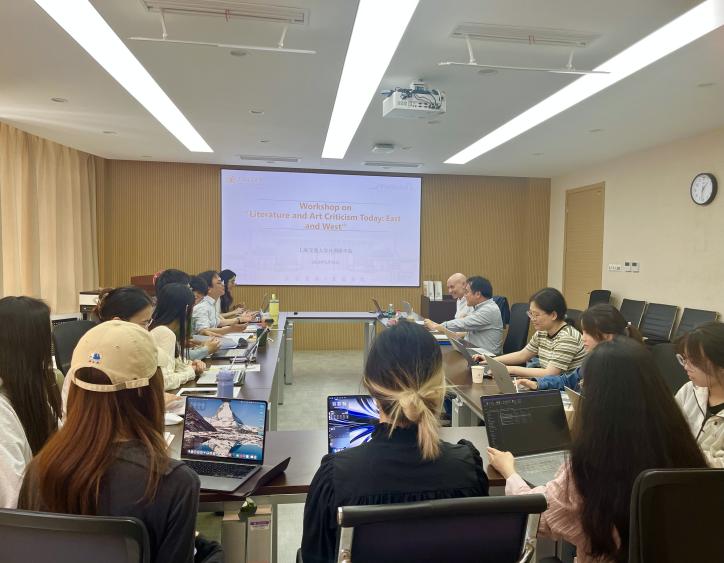
On the afternoon of May 15, 2026, the first event of Shanghai Jiao Tong University Session for the 25th Shanghai Social Science Popularization Week — the workshop Contemporary Literary and Art Criticism: A Dialogue Between East and West — was successfully held in Room 224, Yang Yongman Building, Shanghai Jiao Tong University. Shepherd Steiner, Associate Professor at the University of Manitoba, Canada, engaged in in-depth academic exchanges with Tang Yili, Zou Li and Lang Mengchen, Tenure-Track Associate Professors, and Wang Bowen, Tenure-Track Assistant Professor, all from Shanghai Jiao Tong University. Zou Li presided over the opening ceremony, while Shang Biwu, Distinguished Professor and Dean of the School of Foreign Languages, delivered the opening remarks.
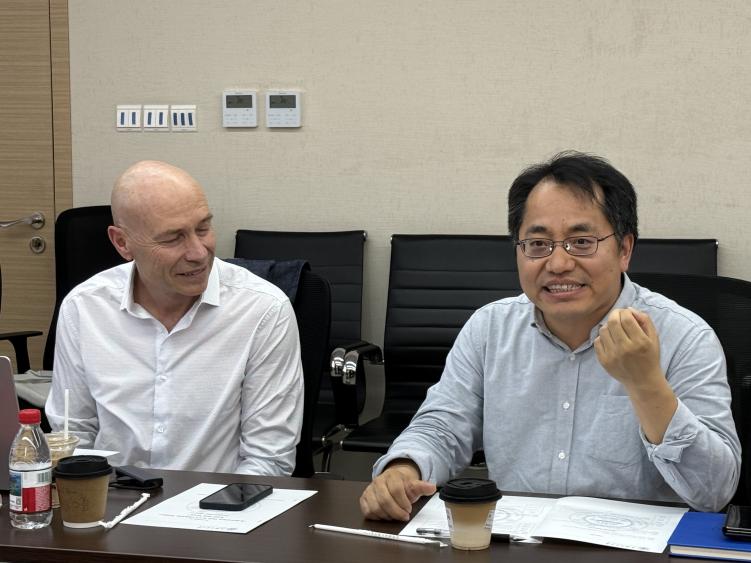
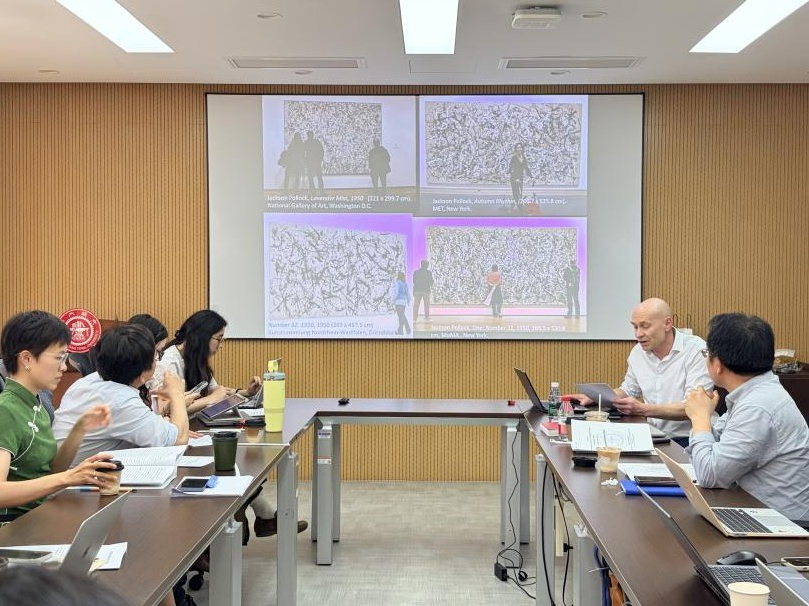
In his presentation entitled Skēnē for ’51: Toward a “Cheerful” Pollock / Out of Pollock’s Madness, Shepherd Steiner revisited Jackson Pollock’s representative paintings created between 1950 and 1951. He argued that contrary to conventional art history narratives, these works did not mark the onset of a spiritual crisis, but rather represented profound conceptual breakthroughs. Drawing on the notion of "lateralism", he analyzed how Pollock’s works challenged the boundaries of flat media and forged a tension between "cheerfulness" and "madness". This reveals the innovative artistic potential of Pollock’s late works in responding to the crises of modernity and the impacts of wars.
In her speech AI Narrative in English Literature, Tang Yili pointed out that generative AI has subverted the traditional model of literary narrative and communication. It has dissolved the unified implied author and rendered narrative voices ontologically rootless, eroding readers’ trust in texts. She proposed that readers adopt a dual reading approach combining "anthropomorphic reading" and "de-subjective reading" — empathizing with the text while examining its algorithmic nature — to establish a brand-new reading paradigm.

With the topic Nonhuman Narrative as World Literature, Zou Li explored the rhetorical logic through which non-human actors restructure global literary networks. Adopting the concept of "computational hub" and taking Neuromancer and Waste Tide as examples, he highlighted cyborgs as pivotal nodes that render invisible global material connections visible. His research demonstrates the theoretical capacity of contemporary literature to engage with and address the crisis of global fragmentation.
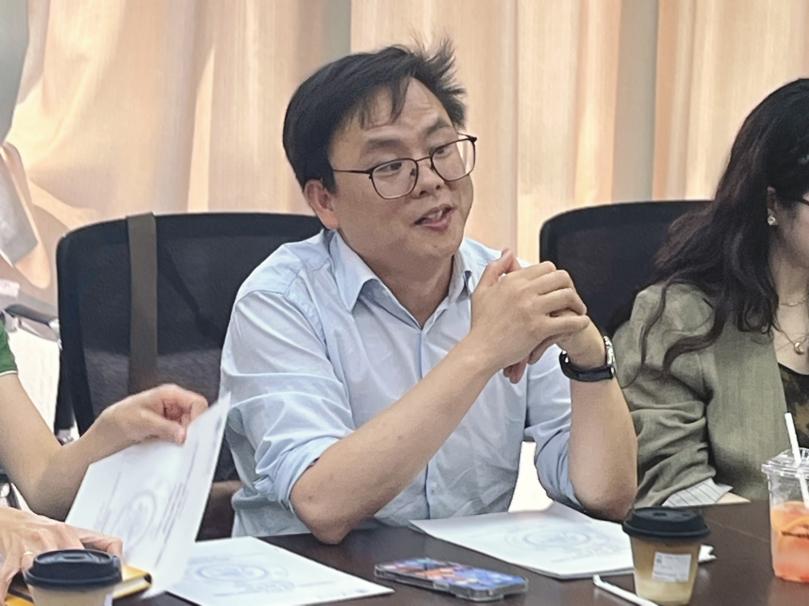
Lang Mengchen discussed the emerging stylistic significance of hybrid (non)fiction in her talk Hybrid (Non)fiction as a Contemporary Genre. She noted that contemporary texts constantly cross the boundary between fiction and nonfiction, and sustain internal tension via the concept of "narrative authenticity". Such works unlock literature’s potential to present multiple truths, prompt readers to reflect on the complex relationship between facts and narrative construction, and offer a powerful response to the epistemic crisis in the post-truth era.
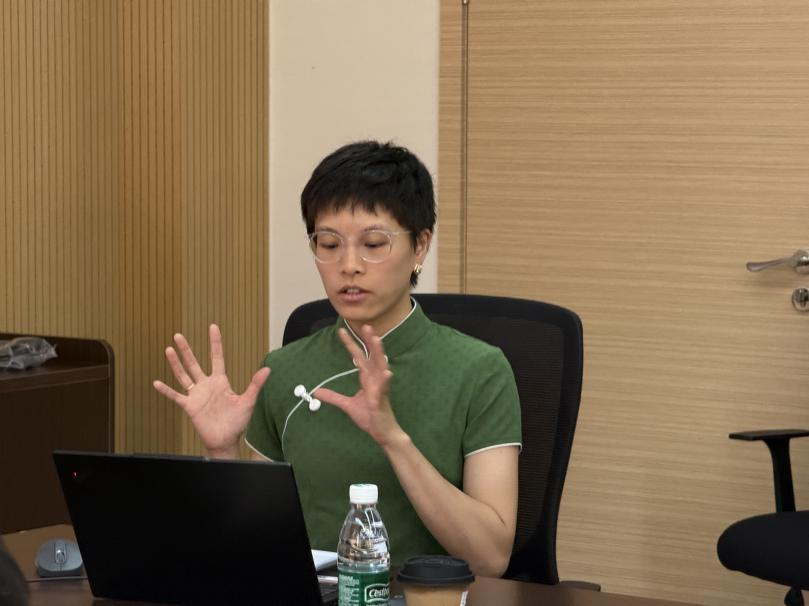
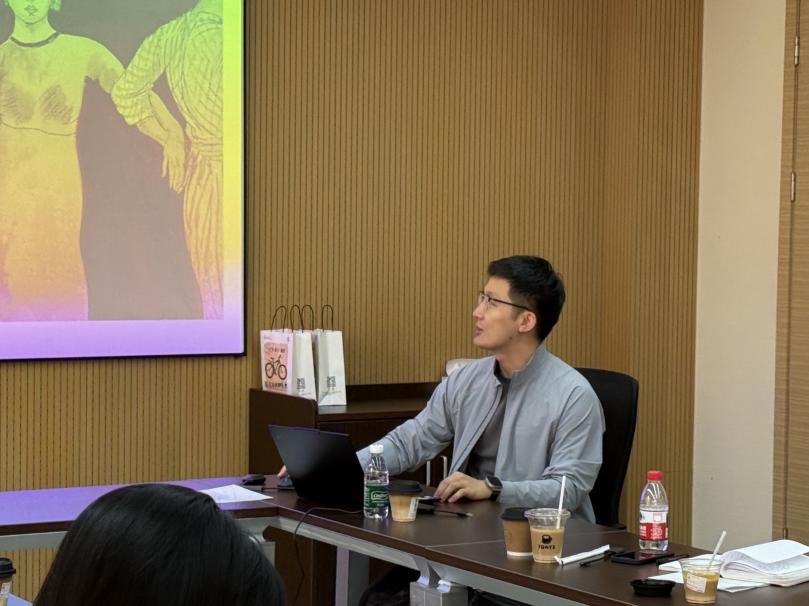
Wang Bowen delivered a speech titled Fashion and Intermedial Surrealism. Using the concept of "remoldable archetype", he interpreted intermedial surrealism. He emphasized that the avant-garde creations by Mina Loy, Elsa Schiaparelli and other artists broke the traditional perception of the body as a fixed carrier of identity, and stimulated tactile agency. Their works provide a new perspective for re-examining fashion media and subject construction.
With this, the first event of Shanghai Jiao Tong University Session for the 25th Shanghai Social Science Popularization Week concluded successfully.